Happy first birthday — enjoy the cake, keep the second nap. Most 12-month-olds still do best on two naps with wake windows around 3.5 hours, even though walking practice and a vocabulary under construction produce a notorious 12-month nap strike that masquerades as one-nap readiness. The real transition usually lands between 13 and 18 months; entering it a few months early is the most common cause of overtired evenings in young toddlers.
The 12-month regression, decoded
Around the first birthday, three things collide: walking (the biggest motor project of the year), a language burst (comprehension exploding ahead of speech), and blossoming independence (strong opinions, loudly held). Sleep disruption here is cognitive overflow, not a schedule problem — so the fix is boring consistency: same nap times, same routine, calm brief responses at night, and patience measured in weeks, not days.
Keep bedtime anchored
With day sleep drifting toward 2–2.5 hours total, bedtime around 7:00–7:45 PM keeps the 24-hour math working (most 1-year-olds need 13–14 total hours). If night sleep shortens or early waking creeps in, check that the afternoon nap isn't ending after 4:00 PM — a late nap end is the quiet bedtime-wrecker at this age.
Schedules are averages.
Your baby isn't.
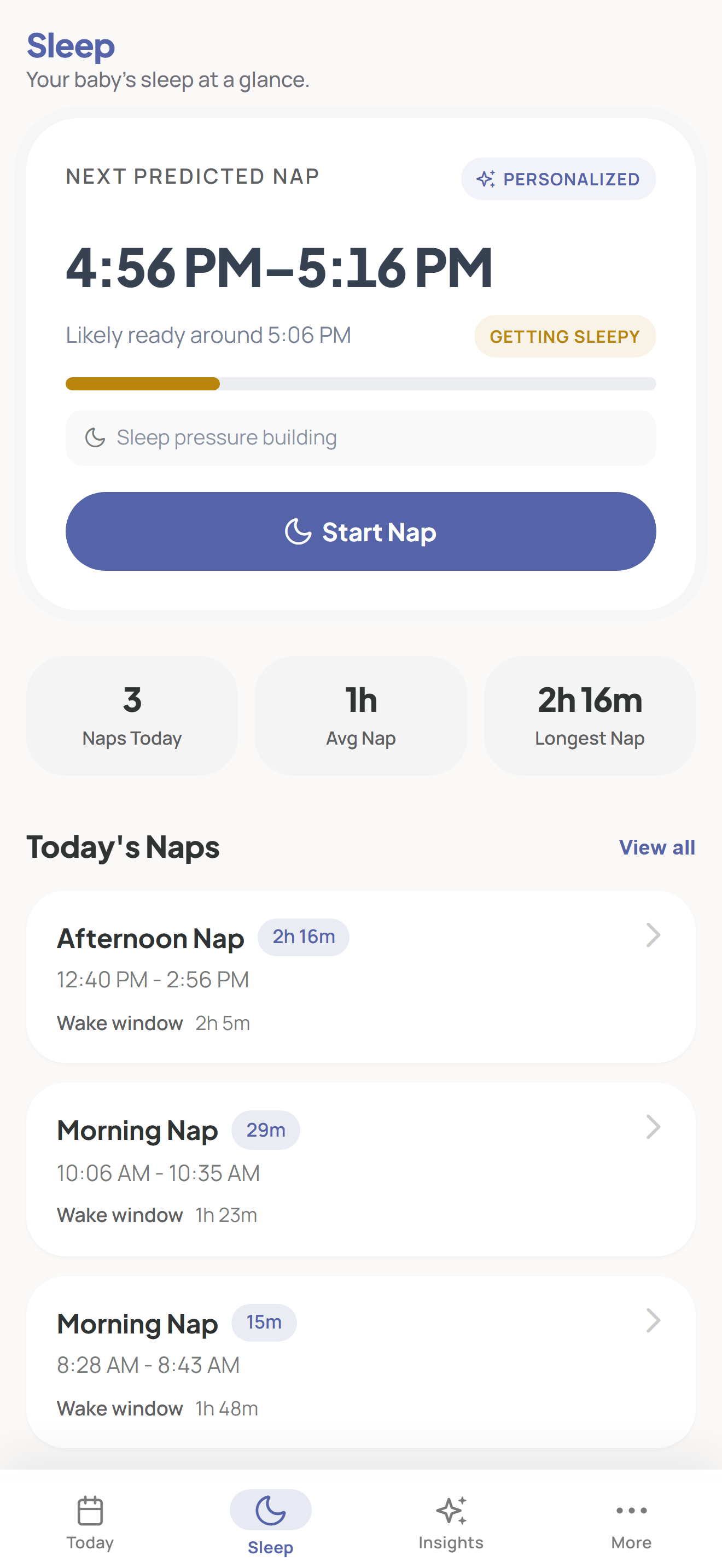
LunaLog learns your baby's actual rhythm from the naps you log and predicts the next nap window automatically — no mental math, and it updates itself as wake windows grow. Free to start, and both parents stay in sync in real time.
Try LunaLog free