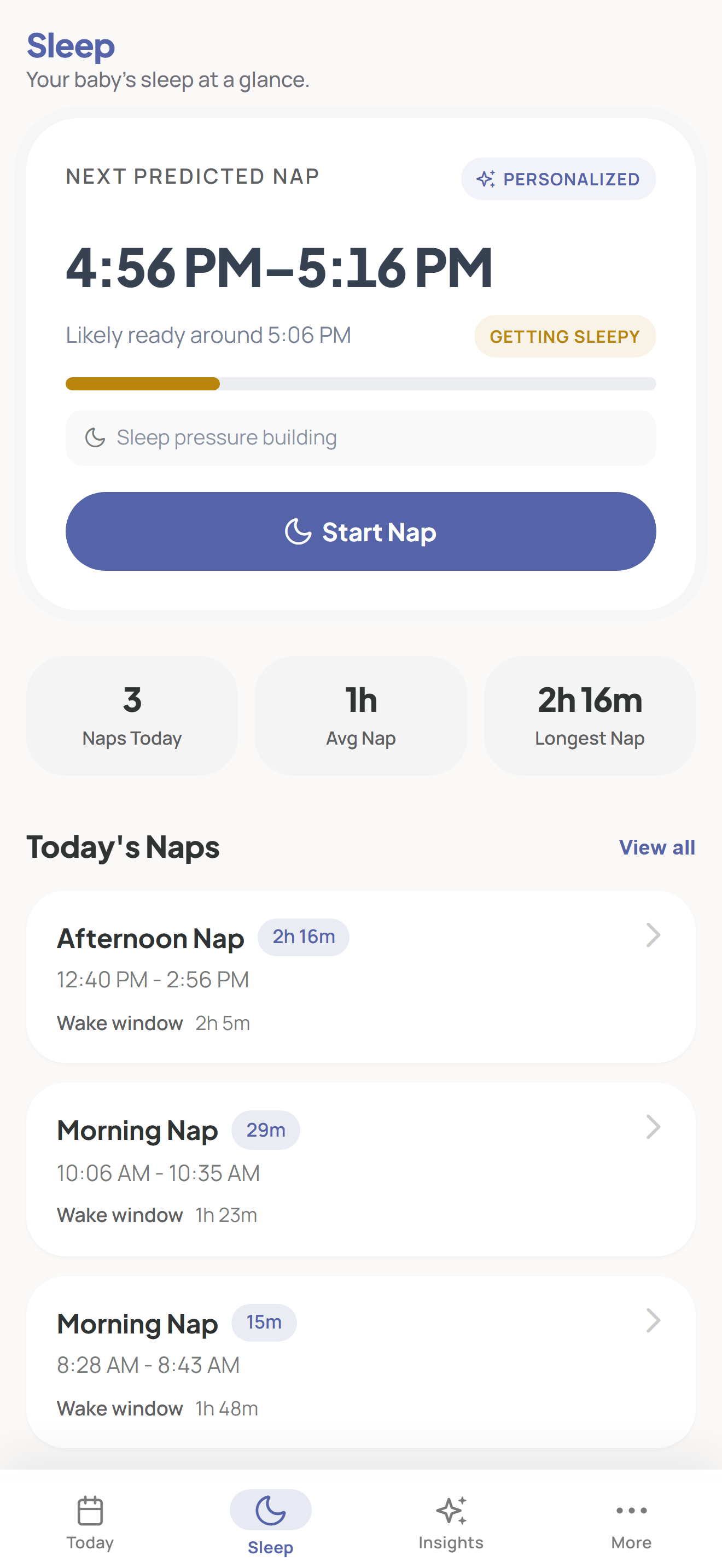
Half a year in, the rhythm is at its most classic: wake windows of 2–2.5 hours, two substantial naps in the morning and early afternoon, a short catnap around 4:30, and bedtime near 7:45. Night sleep should be your baby's longest, most consolidated block — commonly 10–12 hours with zero to two feeds.
Solids and sleep
Starting solids is a milestone, not a sleep intervention — the "load them up and they'll sleep through" folk wisdom doesn't hold up. Early solids are about practice, not calories; milk still does the nutritional heavy lifting. One real interaction to know: keep new foods to mornings/midday at first, so any digestive protest happens in daylight instead of at 2 AM.
If nights are still rough
Six months is the age many pediatricians green-light more structured sleep shaping, because babies can now self-settle and most no longer need multiple night feeds. Whatever approach fits your family, the prerequisites are the same: age-appropriate wake windows during the day, a dark room, a consistent routine, and a consistent response at night. Consistency, not any particular method, is the active ingredient.
Schedules are averages.
Your baby isn't.
LunaLog learns your baby's actual rhythm from the naps you log and predicts the next nap window automatically — no mental math, and it updates itself as wake windows grow. Free to start, and both parents stay in sync in real time.
Try LunaLog free