At ten months the two-nap day continues with wake windows of 3–3.5 hours. Standing, cruising, and first words are all in progress, which means sleep gets periodically photobombed by development. The classic trap at this age: a week of fighting the second nap that looks like readiness for one nap. It almost never is.
Nap strike or nap transition?
A nap strike is sudden, coincides with a new skill or teeth, and the baby is still tired (crankiness, early-morning waking). A real transition is gradual and the baby genuinely lasts the longer window happily. At 10 months, assume strike: hold the two-nap structure calmly for two weeks before concluding anything. Most strikes end as abruptly as they started — and dropping to one nap this early usually buys weeks of overtired evenings.
Early-morning waking
The 5 AM special often traces to one of four causes: bedtime too late (overtired babies wake early — counterintuitive but reliable), the room lightening at dawn, a first nap so early it functions as the tail end of night sleep, or too much total day sleep. Check them in that order; blackout curtains and holding nap one until at least 9:30 fix most cases.
Schedules are averages.
Your baby isn't.
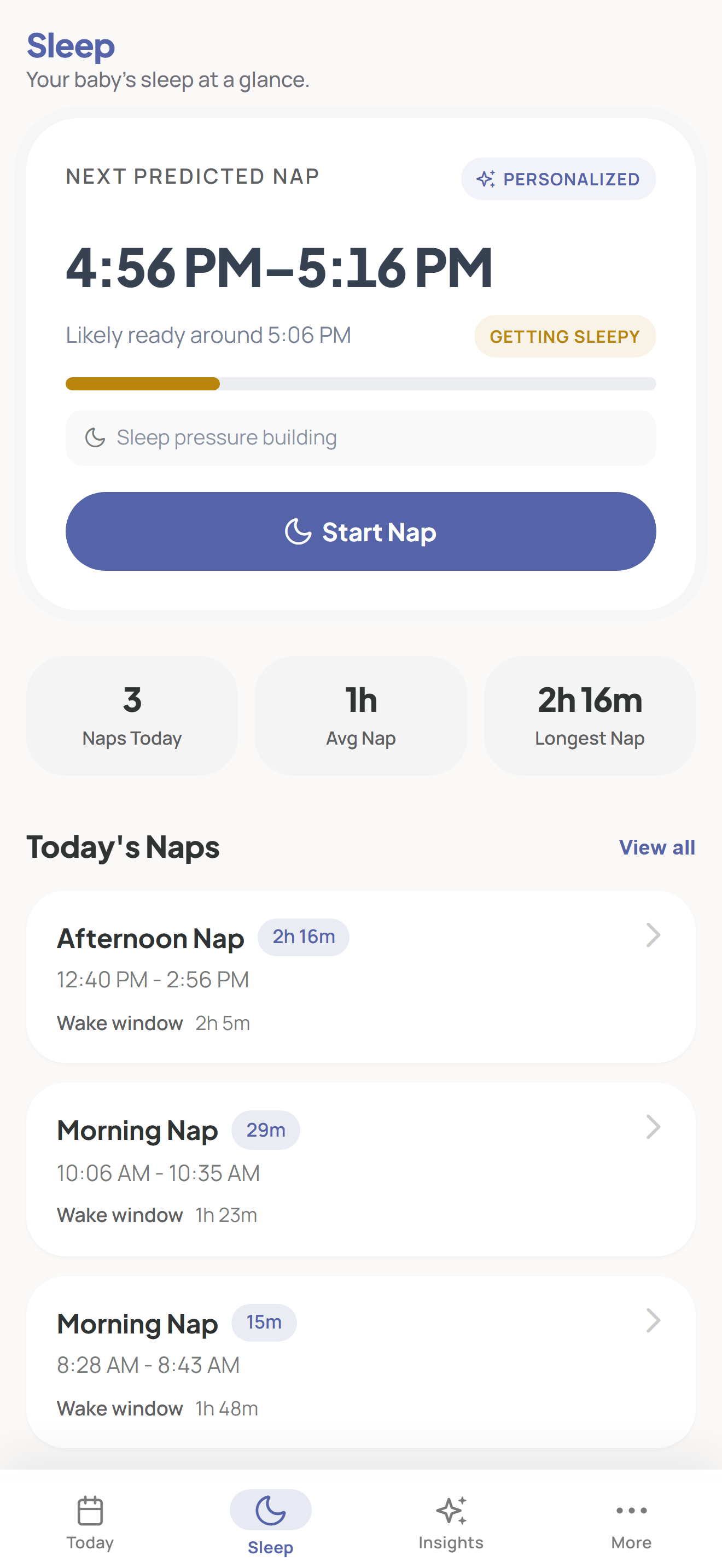
LunaLog learns your baby's actual rhythm from the naps you log and predicts the next nap window automatically — no mental math, and it updates itself as wake windows grow. Free to start, and both parents stay in sync in real time.
Try LunaLog free