Nine months is the payoff for the transition chaos: a settled two-nap day with wake windows near 3 hours and naps that can finally anchor to consistent clock times — commonly around 9:45 and 2:00. Consistent nap times (not just windows) start working now because the circadian rhythm is mature enough to expect sleep at habitual moments.
From windows to clockwork
If your baby's days are consistent, you can drift from pure wake-window math to near-fixed nap times. Hold the morning wake-up steady (within ~30 minutes daily), then anchor nap one; nap two follows. The predictability compounds: babies who know what's coming fight it less, and you get to plan your day. Keep wake windows as your fallback for off-schedule days — travel, illness, skipped naps.
Separation anxiety, continued
The 8–10 month regression can still echo here — bedtime protest and a dramatic new objection to being put down. A predictable goodnight ritual with a clear final step ("song, phrase, into the crib, same words every night") gives your baby certainty about what happens next, which is exactly what separation anxiety needs.
Schedules are averages.
Your baby isn't.
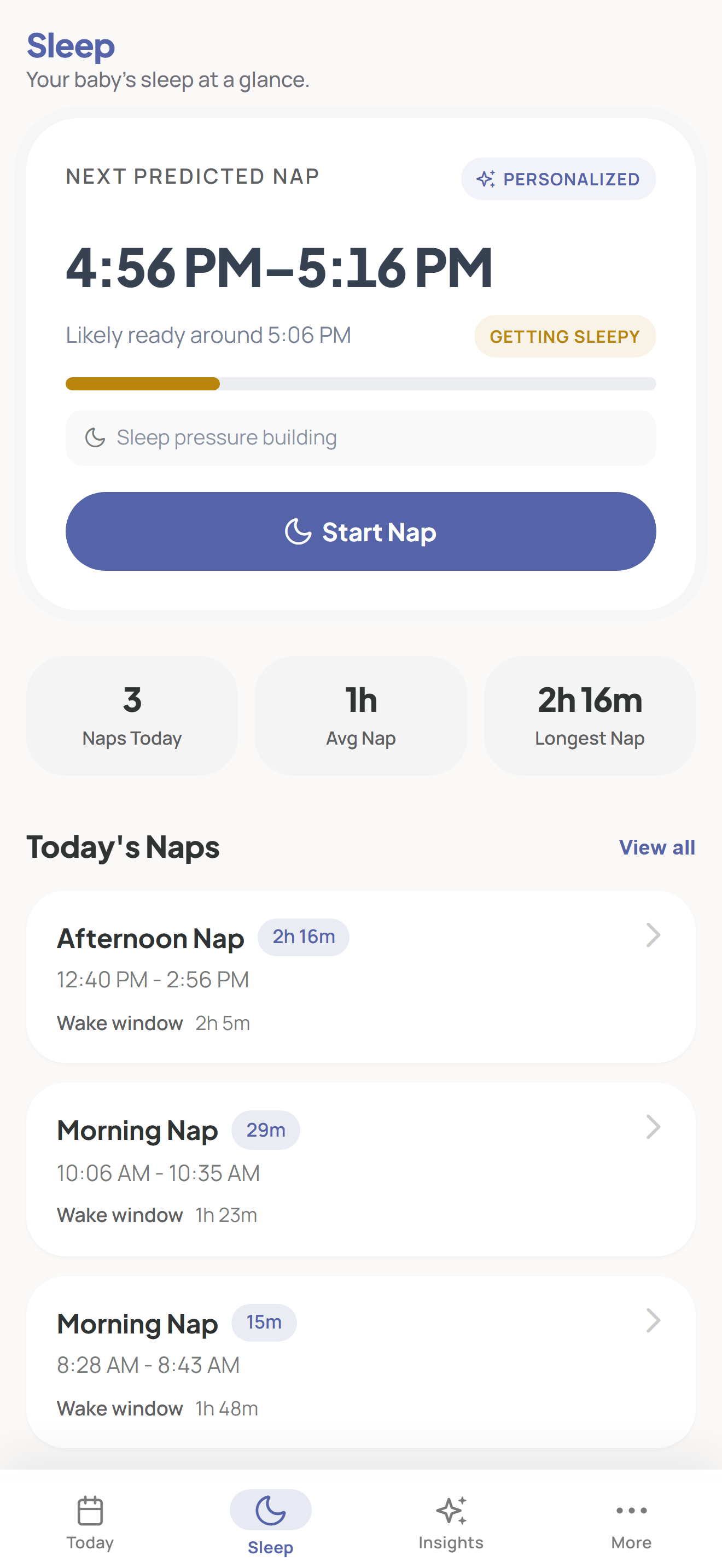
LunaLog learns your baby's actual rhythm from the naps you log and predicts the next nap window automatically — no mental math, and it updates itself as wake windows grow. Free to start, and both parents stay in sync in real time.
Try LunaLog free