By eighteen months the single-nap day is established: one ~2-hour nap starting around midday, flanked by wake windows of 4–6 hours, with bedtime near 7:00–7:30 PM. Which would be simple, except the 18-month regression is famously the feistiest one — because this time it's powered by will.
The 18-month regression
Unlike earlier regressions (driven by sleep architecture or motor skills), this one is developmental psychology: your toddler has discovered no, tests every boundary to learn where the walls are, and has real separation feelings plus possibly molars. Bedtime becomes a negotiation seminar.
What works: hold the routine absolutely steady (toddlers push hardest on boundaries that wobble), offer small controlled choices inside the routine ("red pajamas or dinosaur pajamas?") so autonomy gets fed somewhere harmless, keep goodnights brief, warm, and identical, and treat 2 AM visits like business calls — calm, boring, minimal lighting. It commonly runs 2–6 weeks.
Don’t drop the nap
Nap refusal during this regression is boundary-testing, not nap readiness — the third nap-less year of life is still far away (most children nap until around age 3). Keep offering the nap at the same time daily. If sleep won't come, an hour of quiet crib/room time still restores everyone, and the strike passes.
Schedules are averages.
Your baby isn't.
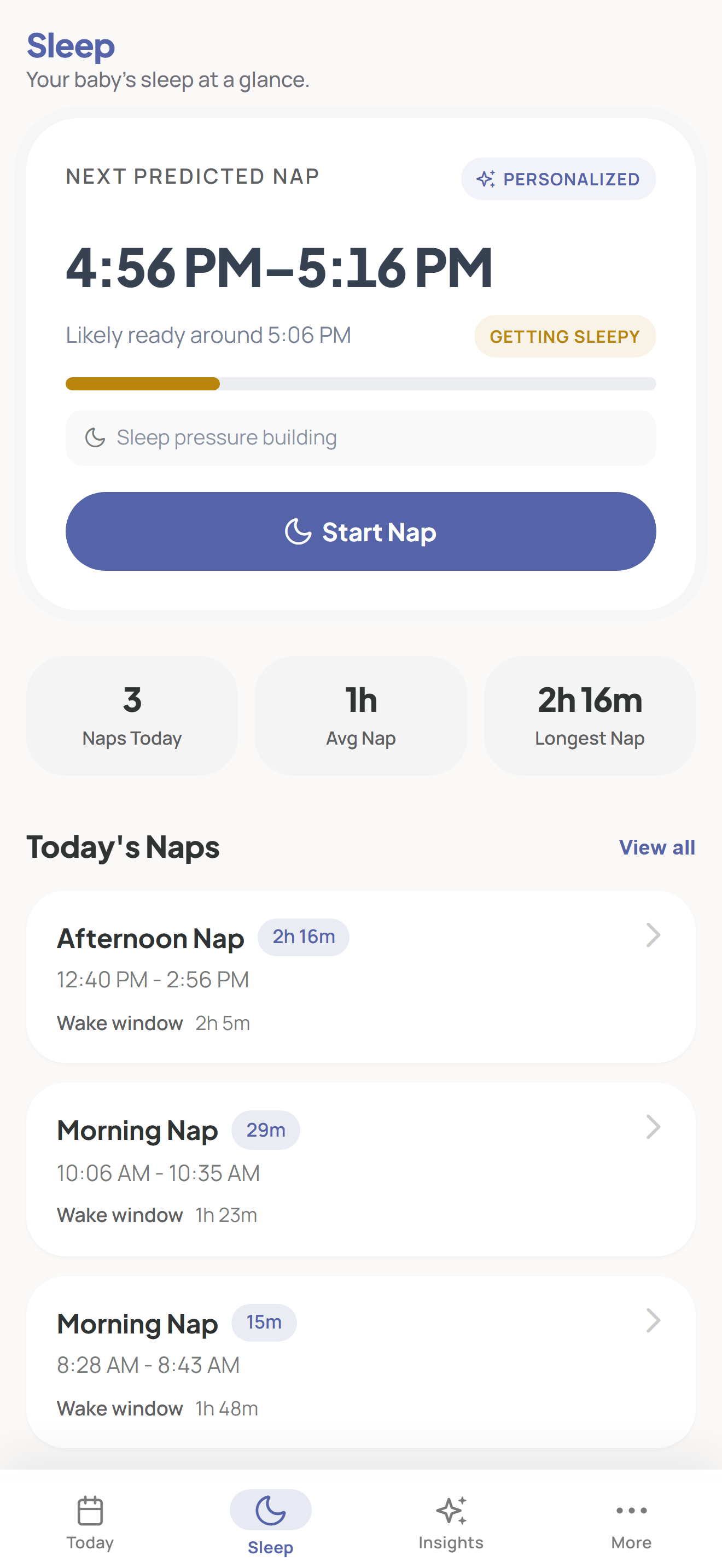
LunaLog learns your baby's actual rhythm from the naps you log and predicts the next nap window automatically — no mental math, and it updates itself as wake windows grow. Free to start, and both parents stay in sync in real time.
Try LunaLog free