Two-year-olds typically run on one 1.5–2 hour nap starting around 12:30–1:00, wake windows of 5–6 hours, and an 11–12 hour night starting between 7:00 and 8:00 PM. Sleep ability is usually solid by now; sleep willingness is the new frontier — this is the age of the curtain call ("water!", "one more book!", "kiss the bear!").
Ending bedtime stalling (kindly)
- Pre-empt the classics — water bottle within reach, potty/diaper handled, the exact number of books announced up front.
- Use a visual routine chart: bath → teeth → books → song → lights. When the chart is the boss, you're just the narrator, and there's nothing to negotiate with.
- One free "callback" pass: some families formalize a single extra kiss/question ticket. Used, done, boring.
- Consistency over cleverness: stalling that works once will be attempted nightly for a month. Warm, brief, identical responses win.
The toddler-bed question (and the shrinking nap)
Stay in the crib as long as possible — ideally toward age 3. A crib is a physical boundary; a bed is a suggestion, and a 2-year-old with door access rarely uses that freedom for sleeping. Unless there's confident climbing out (a safety issue) or a sibling needs the crib, don't rush it.
Meanwhile the nap may shorten toward an hour — normal. Protect it anyway (most children need a nap until ~3), but if bedtime starts running very late, cap the nap's end at 3:00 PM rather than dropping it.
Schedules are averages.
Your baby isn't.
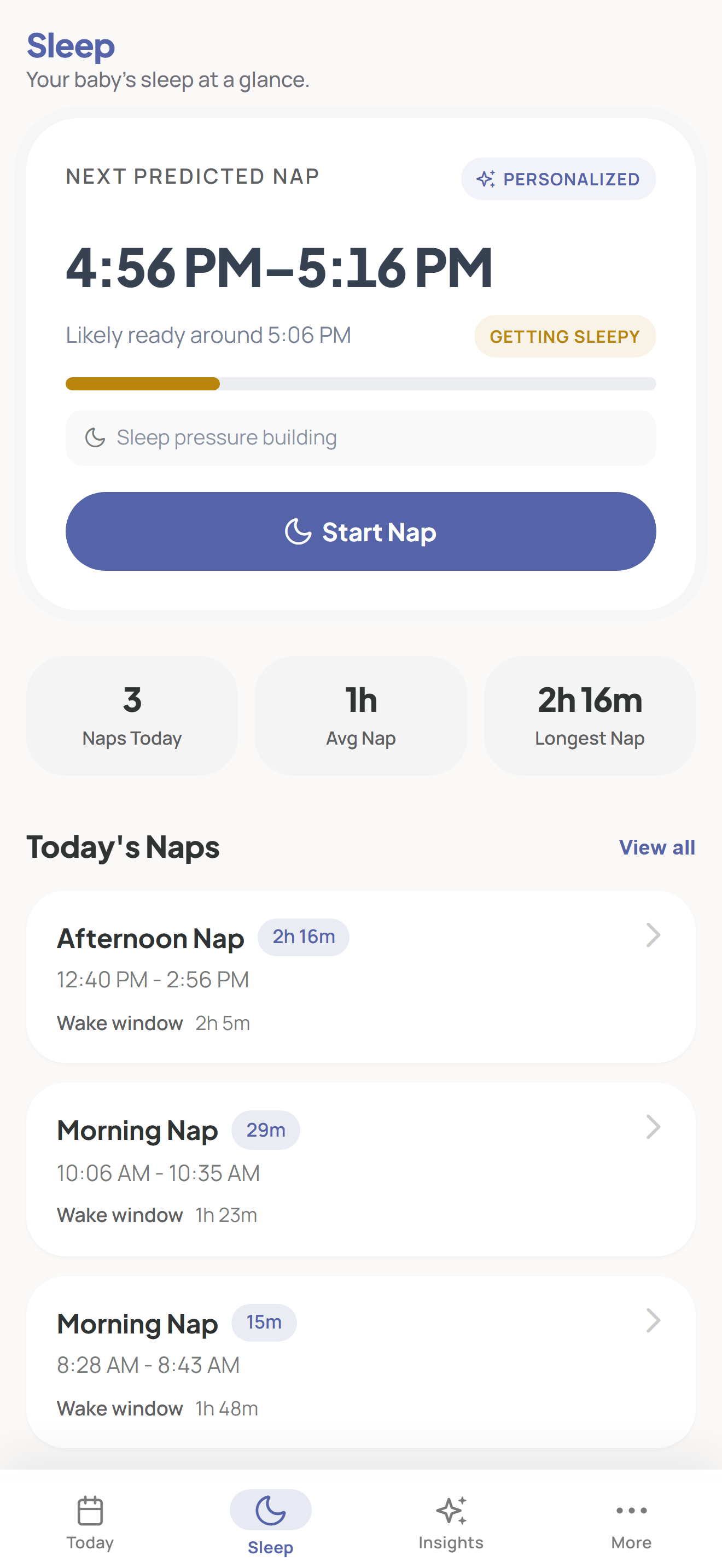
LunaLog learns your baby's actual rhythm from the naps you log and predicts the next nap window automatically — no mental math, and it updates itself as wake windows grow. Free to start, and both parents stay in sync in real time.
Try LunaLog free