Three months is the bridge out of the newborn fog. Wake windows stretch to 75–105 minutes, naps begin consolidating toward four a day, and bedtime drifts earlier — often landing near 8 PM for the first time. You'll notice the morning nap become predictable before anything else; that's the anchor the rest of the day organizes around.
Short catnaps are still completely normal. Nap lengthening comes with the sleep-cycle maturation that happens over the next month or two.
Clock or cues?
Still cues — but the clock is becoming a useful assistant. Start watching for sleepy signs about 15 minutes before the wake window closes. If your baby reliably melts down before the window ends, shorten it; if naps take 20+ minutes of protest to start, lengthen it. Your baby's real window is discovered, not assigned.
Get ahead of the 4-month changes
Next month, sleep cycles restructure permanently (the famous "4-month regression"). You can soften the landing now: practice putting your baby down drowsy but awake for one nap a day, keep the bedtime routine identical every night, and make sure daytime feeds are full feeds so night wakings are less about hunger.
Schedules are averages.
Your baby isn't.
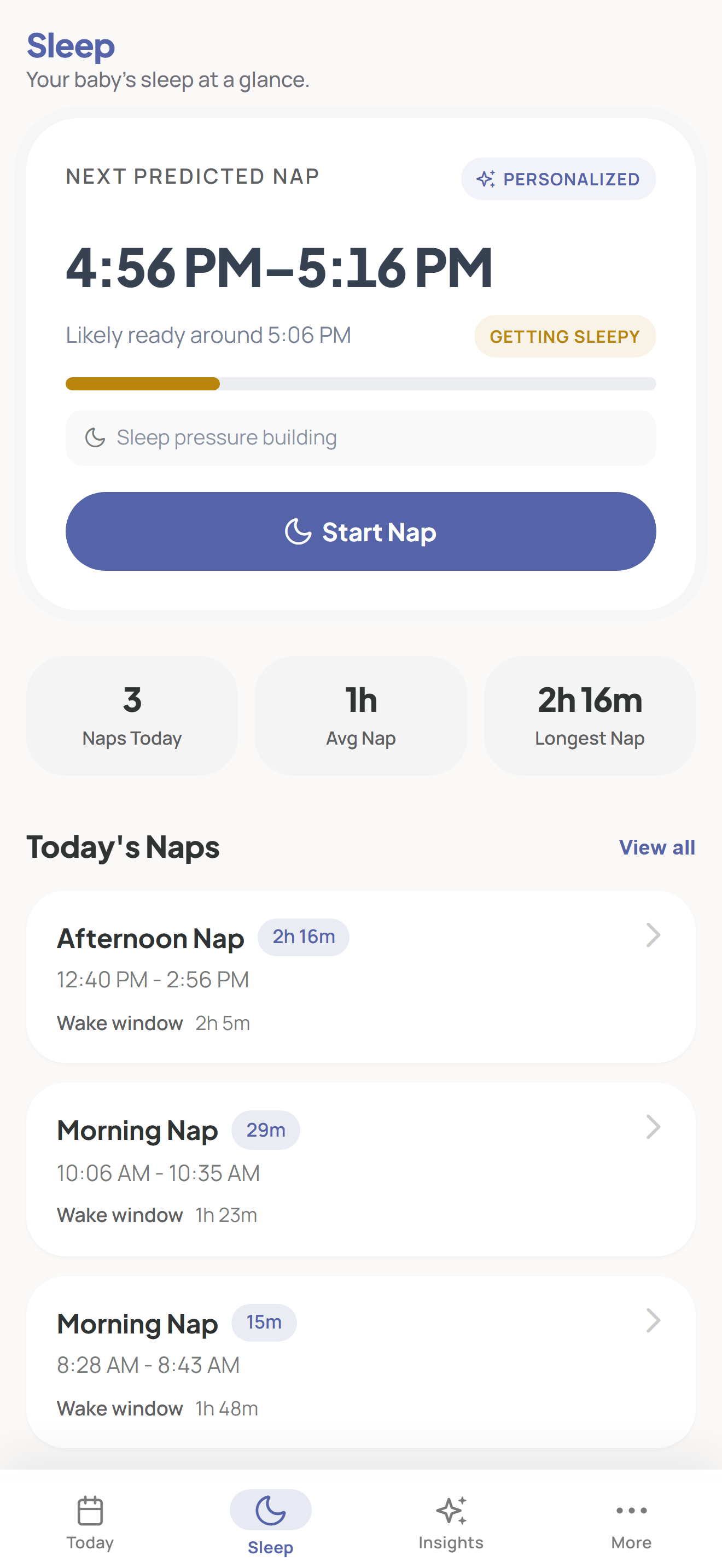
LunaLog learns your baby's actual rhythm from the naps you log and predicts the next nap window automatically — no mental math, and it updates itself as wake windows grow. Free to start, and both parents stay in sync in real time.
Try LunaLog free