At four months, wake windows run about 1.5–2 hours across a four-nap day. But the headline is the 4-month sleep regression — the one change at this age that isn't a phase. Your baby's sleep architecture permanently reorganizes into adult-like cycles: light sleep, deep sleep, and a brief wake-up between cycles, roughly every 45 minutes.
Babies who know how to fall asleep on their own simply resettle through those little wake-ups. Babies who fall asleep being fed or rocked wake between cycles and ask for the same help again — at 11 PM, 1 AM, 3 AM…
Surviving the regression
- Protect wake windows fiercely. Overtiredness stacks on top of the regression and makes everything worse. When in doubt, offer the nap early.
- Practice drowsy-but-awake at bedtime first (it’s the easiest sleep of the day), then the morning nap.
- Move bedtime earlier — 7:00–7:30 PM is fine during rough patches. Lost night sleep at this age is best repaid at the front of the night.
- Keep the routine identical. The predictable sequence is a sleep cue in itself.
The disrupted-sleep phase typically lasts 2–6 weeks. The new sleep architecture is forever — which is why building settling skills now pays off for years.
Naps this month
Four naps is still typical, but the day is starting to stretch: many babies drop to a 3-nap day between 4 and 5 months. The tell is the last nap of the day getting fought or pushing bedtime too late — when that happens consistently for a week, it's transition time, and an earlier bedtime covers the gap.
Schedules are averages.
Your baby isn't.
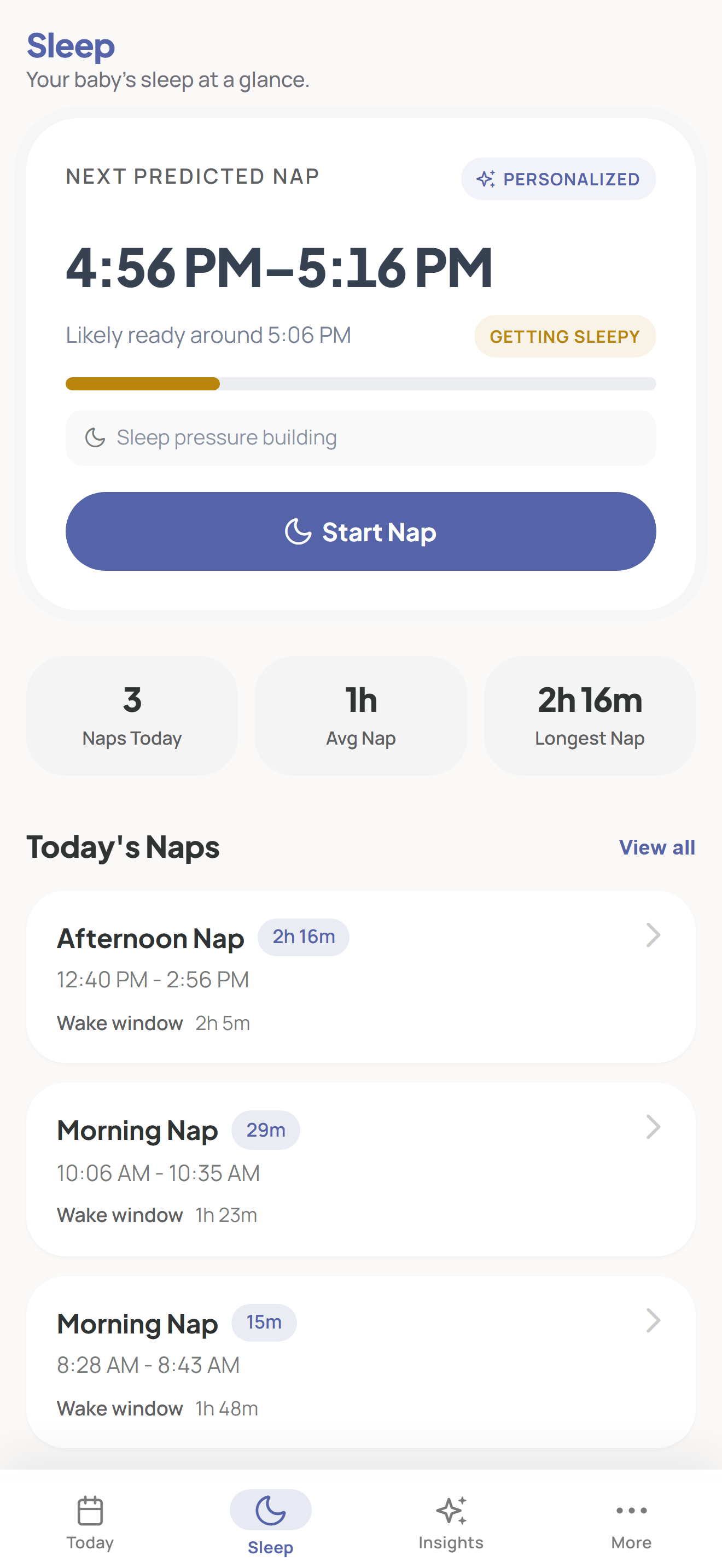
LunaLog learns your baby's actual rhythm from the naps you log and predicts the next nap window automatically — no mental math, and it updates itself as wake windows grow. Free to start, and both parents stay in sync in real time.
Try LunaLog free